Fosroc Chemicals Mohali | Premium Waterproofing Solutions
Protect your structural investments with precision chemistry. We implement permanent, commercial-grade leak elimination strategies designed for local environmental challenges.
Why Mohali Concrete Demands Advanced Polymer Chemistry
The geographic region of Mohali experiences significant environmental volatility. With ambient temperatures shifting between intensely high summer heat and heavy, persistent monsoons, concrete structures undergo intense thermal cycling.
Standard concrete mixes possess natural porosity, forming thousands of microscopic capillaries during the hydration phase. When rain falls or standing water pools, capillary action draws moisture deep inside the structural framework.
As an established, professional waterproofing company in Mohali, we eliminate this liability. We implement specialized Fosroc chemical barriers that deeply modify substrate characteristics, sealing vulnerable pores permanently.
The Mechanical Breakdown Pipeline
Unmitigated water ingress instigates a destructive sequence inside structural concrete:
Atmospheric carbon dioxide reacts with concrete hydroxides, decreasing alkaline protection and exposing rebar.
Internal moisture induces rust on embedded structural steel, causing metal expansion up to 600% its original size.
Internal expanding forces fracture the concrete mass, causing crack propagation, sheet cleavage, and complete structural failure.
High-Performance Material Systems
Different problems require distinct molecular structures. We cross-link precise chemical profiles with specific mechanical stresses.
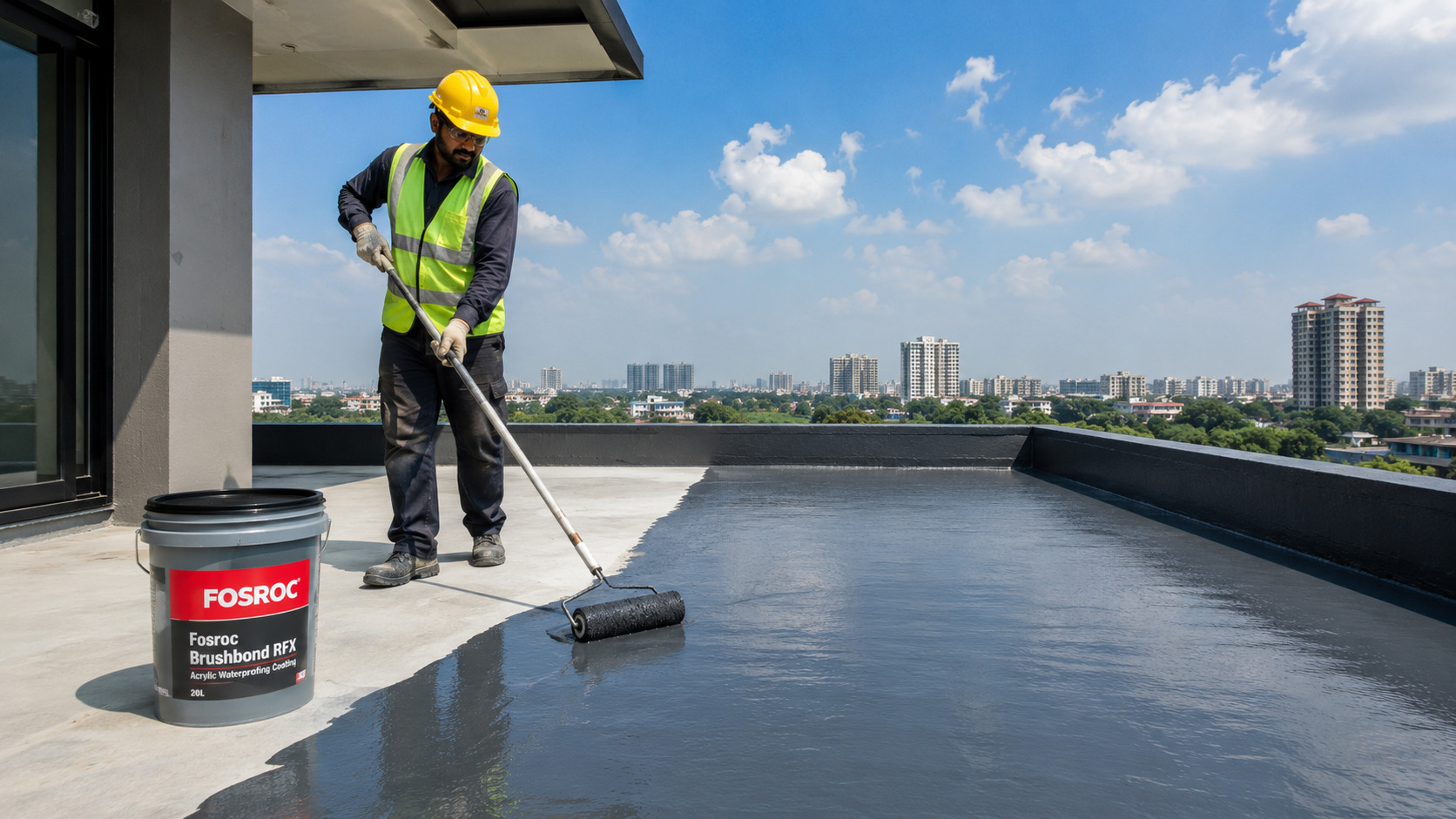
A state-of-the-art, two-component acrylic polymer-modified elastomeric coating. When brushed onto concrete, it forms an advanced matrix that prevents carbonation while remaining uniquely vapor-permeable, letting internal moisture escape without blistering.
Ideal for: Sunken slabs, washrooms, shafts
A pitch-free, liquid-applied polyurethane elastomer that chemically cures to build a highly elastic, seamless rubber membrane. Boasting excellent crack-bridging capabilities, it handles severe structural vibration without rupture.
Ideal for: Exposed podiums, roofs, large decks
Extruded polymer waterstops strategically embedded along construction joints. They provide a high-efficiency physical maze that prevents pressurized water transit across multi-stage pouring boundaries.
Ideal for: Subgrade structures, pools, basements
Comparative Matrix: Polymer vs. Generic Coatings
| Technical Standard | Fosroc Engineering Specification | Traditional Bitumen / Cement Base |
|---|---|---|
| Crack Accommodation | Bridges live fissures up to 2.0mm effortlessly | Splits instantly under minor shift stresses |
| Thermal Performance | Maintains continuous properties from -10°C to +80°C | Becomes brittle when cold, flows/melts in direct summer heat |
| Vapor Venting | Micro-breathable membrane layout prevents hot blisters | Traps rising subterranean vapor, inducing membrane detachment |
| Expected Lifecycle | Validated 10 to 15 Years operating duration | Requires localized re-coating every 18-36 months |
Targeted Protection Profiles
Structural spaces demand specialized mechanical traits. Explore our high-accuracy configurations utilizing specific sitemap coordinates.
1. High-Exposure Terrace Slabs
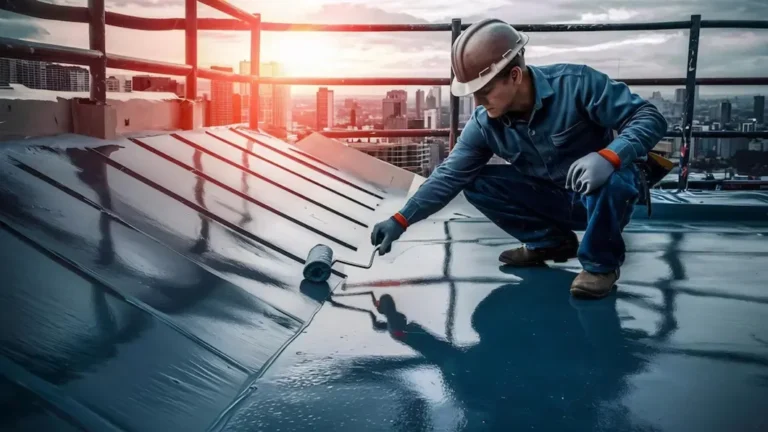
Exposed roof areas encounter significant solar load and structural tension. We apply advanced polyurethane coatings that handle water ponding while remaining flexible under heat waves, blocking leaks at construction perimeter joint edges.
Formulation Priority: Aliphatic UV-Resistant Polyurethane Membrane Array
2. Cantilevered Balconies & Decks
Cantilever elements feature slight deflection variations under load changes. Our multi-layered brush treatments form an elastic seal beneath structural flooring tile mortar, protecting edges against rain penetration.
Formulation Priority: High-Elongation Acrylic-Modified Cementitious Sealant
3. Sunken Bathroom Vaults
Bathrooms struggle with constant moisture exposure from sanitary pipe lines. We seal internal concrete walls and floor bases, blocking water from leaking into room surfaces downstairs.
Formulation Priority: Crystalline Pore-Blocker Compound with Non-Shrink Epoxy Capping
4. Modular Kitchen Wet Zones
Hidden drainage junctions behind luxury kitchen units can leak unnoticed. Applying a continuous coating prevents water from soaking into concrete slabs and spoiling structural carpentry setup surfaces.
Formulation Priority: Dual-Component Vapor-Permeable Base Barrier Coating
5. Potable Fluid Reservoirs
Water tanks face persistent internal water pressure. We apply certified, non-toxic epoxy coatings that seal water inside perfectly without leaching chemicals or altering water safety standards.
Formulation Priority: Certified Solvent-Free Pure Food-Grade Epoxy Compound Matrix
6. In-Ground Swimming Pools
Subgrade pools handle two types of water stress: standard water pressure from the inside, and ground water pushing inward from the outside. We use heavy-duty waterstops and dense crystalline formulations to secure these systems.
Formulation Priority: Crystalline Hydrophobic Osmotic Structural Compound System
7. Structural Window Reveals & Façades
Wind-driven rain can push moisture past window outer joint boundaries. Using industrial polyurethane sealants keeps joint perimeters completely watertight, shielding internal plaster finishes.
Formulation Priority: High-Modulus Polyurethane Structural Joint Expansion Joint Compound
Our 4-Step Application Matrix
Grinding & Prep
Mechanically cleaning the substrate to remove laitance, dust, and grease. This strictly opens concrete pores for maximum chemical penetration and bonding.
Crack Routing
Treating active damage by chasing cracks into ‘V’ grooves and sealing them with Fosroc Renderoc and high-flex polymer-modified sealants.
Chemical Matrix
Applying a dedicated primer followed by 2-3 coats of liquid-applied membranes in cross-directions to ensure zero pinholes.
Ponding Test
A 48-hour standing water test to prove zero leakage before handover.
Warning Signs: Don’t Wait
If you spot these indicators, moisture is actively attacking your building framework:
- Blistering Paint: Internal vapor pressures are pushing the decorative paint layer outward.
- Musty Odors: Microscopic leaks inside walls foster structural mold spore colonies.
- Efflorescence: Migrating moisture brings interior mineral salts out to crystalize on masonry.
- Ceiling Stains: Dark brown rings indicate active leaks in upper floor slabs.
Smart Engineering. Real Solutions.
About Us: Rishi Gautam Enterprises focuses on practical, results-driven suggestions that solve modern architectural issues. We eliminate guesswork by tracking dampness down to its physical roots.
Our field teams deploy calibrated application processes that meet strict technical guidelines, giving your building long-term durability.
Long-Term Maintenance Guidelines for Treated Substrates
An elite chemical membrane performs best when shielded from unnecessary physical damage. Follow these three simple rules to maximize your system’s lifespan:
Never drill anchor bolts, install satellite mounts, or punch holes into protected surfaces without a professional border re-seal.
Clear out leaves and mud regularly. Preventing weeks of unintended, high-pressure water pooling helps preserve the membrane surface.
Keep an eye on perimeter movement joint sealants every year. Catching building settlement early avoids bigger repair needs down the road.
Engineering Knowledge Base
Straight answers. No fluff.
How exactly do Fosroc polymers handle shifting hairline cracks over time?
Fosroc elastomers like Nitoproof and Brushbond Plus feature high cross-linked polymer elongation. When structural changes cause concrete micro-fissures, the membrane acts like a durable rubber sheet, stretching over gaps up to 2mm to keep the water barrier unbroken.
Can clear polyurethane coatings protect tiled balcony floors without removing them?
Yes. If your current tiles are firmly attached, we can apply transparent, UV-stable aliphatic polyurethane systems over them. This seals porous grout lines and cracks without the cost or disruption of tearing out tiles.
What are the health safety ratings for coatings inside drinking water tanks?
We use solvent-free, 100% solids epoxy coatings designed specifically for potable water storage. Once fully cured, they create a glass-like surface that prevents chemical leaching and matches international safety standards.
How does moisture affect installation timelines if the slab is damp?
Polyurethane membranes require dry concrete bases to prevent blistering. However, cementitious systems like Brushbond can handle damp concrete because they are vapor-permeable, allowing the base to cure naturally without damaging the bond.
Build Smart. Execute Better.
Stop relying on quick temporary patches. Secure your property’s future with clear, long-term engineering choices that protect your investment.