How Long Does Waterproofing Last? Lifespan by Type, Area & Climate (2026 Guide)
Quick Answer
Waterproofing usually lasts 5 to 25 years, depending on the system used and how well it was applied. Cementitious coatings last about 5–10 years, acrylic roof coatings 5–8 years, polyurethane (PU) liquid membranes 10–15 years, APP/SBS bituminous membranes 10–20 years, and crystalline treatments can last as long as the concrete itself. Surface preparation, workmanship, UV exposure and regular maintenance decide whether you get the low or high end of that range.
You spent money waterproofing your roof three monsoons ago, and now there’s a damp patch spreading on the bedroom ceiling again. Sound familiar?
It’s one of the most common calls we get in Mohali and Chandigarh. Homeowners want to know one simple thing: how long does waterproofing last, and was the last job a waste of money?
The honest answer is that no single number applies to every building. A terrace in Sector 118 that bakes at 45°C in June and then sits under heavy July rain is a very different challenge from a bathroom floor hidden under tiles. In this guide, we break down the real-world lifespan of every major waterproofing system, the factors that shorten or extend it, the warning signs that your waterproofing is failing, and what you can do to get the most years out of your investment.
What Is Waterproofing and Why Doesn’t It Last Forever?
Waterproofing is a protective barrier, applied as a coating, membrane, sheet or chemical treatment, that stops water from passing through concrete, brick, plaster or other building materials. It protects the structure, the steel reinforcement inside it, and everything inside your home.
But every waterproofing material ages. Here’s why:
- UV radiation breaks down the polymers in exposed coatings, making them brittle and chalky.
- Thermal movement makes concrete expand in the day and contract at night. Rigid coatings crack; flexible ones slowly fatigue.
- Standing water on poorly sloped roofs keeps the membrane under constant pressure.
- Foot traffic and installations such as solar panel stands, water tanks and dish antennas puncture or abrade the layer.
- Structural movement such as settlement cracks or new construction nearby can tear the barrier.
Understanding these enemies is the key to understanding lifespan.
How Long Does Waterproofing Last? Lifespan by Waterproofing Type
The table below shows typical service life in North Indian conditions when the system is correctly specified, applied by trained applicators, and reasonably maintained.
| Waterproofing Type | Typical Lifespan | Best For | Main Weakness |
|---|---|---|---|
| Cementitious coating | 5–10 years | Bathrooms, water tanks, basements (internal) | Rigid, cracks with movement |
| Acrylic elastomeric roof coating | 5–8 years | Exposed terraces, budget projects | Thin film, wears under traffic and ponding |
| Polyurethane (PU) liquid membrane | 10–15 years | Terraces, balconies, podiums | Needs UV-stable topcoat; sensitive to damp surfaces |
| APP / SBS bituminous membrane (torch-on) | 10–20 years | Large flat roofs, basements (external) | Joint/lap failures if poorly torched |
| EPDM / TPO / PVC sheet membrane | 20–30 years | Commercial roofs, green roofs | Higher cost, specialist installation |
| Crystalline waterproofing | Life of the concrete | Basements, tanks, new RCC | Can’t bridge moving cracks |
| Brick bat coba (traditional) | 10–20 years | Older RCC roofs needing slope | Heavy; hard to repair once it holds water |
| PU / epoxy injection grouting | 5–10+ years | Active leaks, cracks, construction joints | Treats the crack, not the whole surface |
Note: Ranges are general industry estimates. Actual life depends on the specific product grade, coating thickness, site conditions and maintenance. Always check the manufacturer’s technical data sheet and the written warranty.
Cementitious Waterproofing (5–10 Years)
Cement-based coatings are mixed with polymers and brushed on in two or three coats. They’re affordable, bond well to concrete and are safe for potable water tanks. Because they’re rigid, they don’t handle building movement well, so they’re best used in protected areas such as under bathroom tiles or inside water tanks rather than on exposed roofs.
Acrylic and Elastomeric Coatings (5–8 Years)
These are the white or light-coloured “roof paints” many homeowners recognise. They reflect heat, are quick to apply and cost less. The trade-off is a thin film that wears out faster, especially where water ponds. Plan on a fresh top coat every 4–6 years.
Polyurethane Liquid Membranes (10–15 Years)
PU membranes form a seamless, rubber-like layer that stretches with the slab. They’re one of the most reliable choices for terraces and balconies. The catch is that aromatic PU degrades under sunlight, so an aliphatic (UV-resistant) top coat or a protective screed is essential for the full lifespan.
Bituminous APP/SBS Membranes (10–20 Years)
Torch-applied membranes are tough, thick and proven on large flat roofs. SBS stays flexible in cold weather; APP handles heat better. Most failures happen at the overlaps (laps), upstands and drain outlets, not in the middle of the sheet, which is why workmanship matters so much.
Crystalline Waterproofing (Life of the Structure)
Crystalline products react with moisture and free lime inside concrete to grow crystals that block capillary pores. Because the protection becomes part of the concrete itself, it doesn’t peel or wear away. It’s excellent for basements and tanks but can’t seal cracks that keep moving.
⚠ Warning: A Great Product Can Still Fail in 2 Years
The most expensive membrane on the market will fail early if it’s applied over dust, loose plaster, a wet slab or unrepaired cracks. In our experience, poor surface preparation and missed detailing at drains, parapet joints and pipe penetrations cause far more leaks than the material itself.
How Long Does Waterproofing Last in Different Areas of Your Home?
Where the waterproofing sits in your building changes its lifespan just as much as which product is used.
| Area | Expected Lifespan | Recommended System |
|---|---|---|
| Roof / Terrace (exposed) | 5–15 years | PU membrane with UV topcoat, or APP membrane |
| Bathroom (under tiles) | 10–15 years | Polymer-modified cementitious or PU, with corner reinforcement |
| Kitchen | 10–15 years | Cementitious coating below tiles |
| Balcony | 8–12 years | PU or flexible cementitious with proper slope |
| Basement | 10–25+ years | External membrane plus crystalline |
| Water Tank | 7–12 years | Potable-grade cementitious or crystalline |
| External walls | 5–8 years | Elastomeric exterior coating, crack filling |
Roof and Terrace Waterproofing
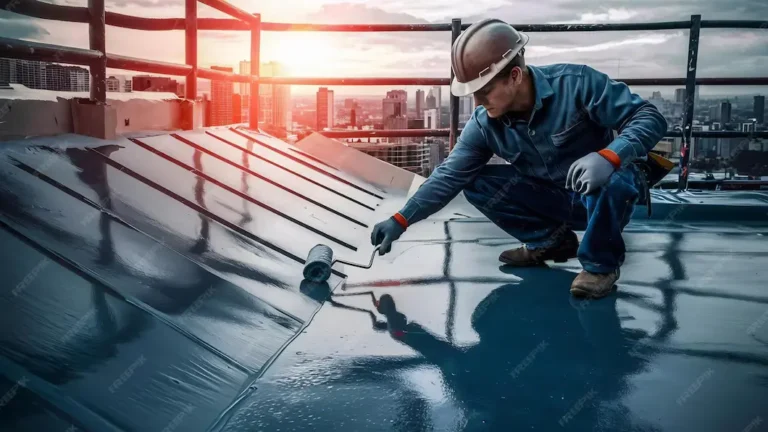
Your roof takes the most punishment: direct sun, monsoon rain, temperature swings and people walking on it. That’s why exposed roof coatings have the shortest lifespan in the house. Adding a protective screed or tiles over the membrane can add several years. If your terrace is leaking or the coating is more than 8 years old, our terrace waterproofing services start with a full inspection before we recommend any system.
Bathroom Waterproofing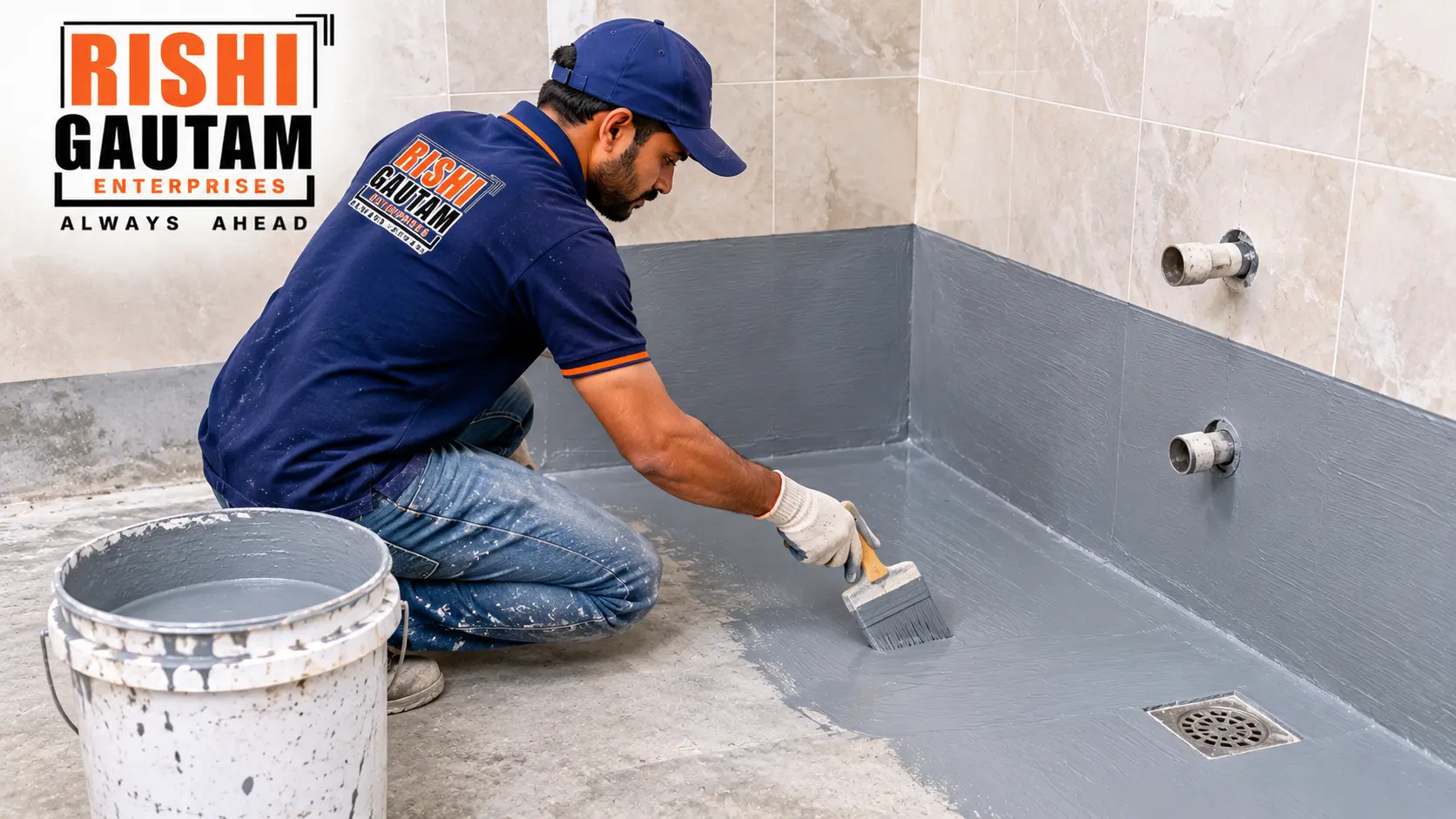
Because it’s hidden under tiles and protected from sunlight, bathroom waterproofing can last 10–15 years. However, cracked grout, broken tiles and leaking pipe joints let water reach the layer underneath and attack it from above. Seepage into the room below or damp skirting in the next room are classic signs. Learn more on our bathroom waterproofing services page.
Basement Waterproofing
Basements face constant hydrostatic pressure from groundwater. Positive-side (external) systems applied during construction last longest. Negative-side (internal) treatments are useful for existing buildings but generally need more frequent attention.
Not Sure How Much Life Your Waterproofing Has Left?
Get a site inspection in Mohali, Chandigarh or Mullanpur. We’ll check your roof, bathrooms and walls and tell you whether you need a repair or a full re-coat.
8 Factors That Decide How Long Your Waterproofing Will Last
1. Surface Preparation
Grinding, cleaning, removing old flaky coatings, repairing cracks and priming the surface is unglamorous work, but it decides how well the new system bonds. Skip it and the coating peels.
2. Quality and Grade of Material
Reputed brands such as Dr. Fixit, Fosroc, Sika, Mapei and MYK Laticrete offer several grades of the same product type. A 2-year “economy” coating and a premium 10-year membrane can look identical in the bucket.
3. Coating Thickness (DFT)
Every liquid system has a specified dry film thickness. Thinning the material or applying one coat instead of two cuts its life dramatically.
4. Workmanship and Detailing
Corners, parapet-to-slab joints, drain outlets, pipe penetrations and expansion joints need extra reinforcement (fibre mesh, coving, or sealant). Most leaks start at these details.
5. Climate and UV Exposure
The Tricity region sees very hot summers, a concentrated monsoon from July to September and cool winters. This wide temperature range causes repeated expansion and contraction, which fatigues rigid coatings faster than in milder climates.
6. Roof Slope and Drainage
Water that ponds for more than 48 hours after rain is one of the fastest ways to destroy a coating. A correct slope towards clean, unblocked rainwater outlets is essential.
7. Structural Condition
Waterproofing can’t fix structural cracks or a slab with corroded steel. Those problems must be repaired first.
8. Maintenance
A simple yearly inspection before the monsoon catches small problems while they’re still cheap to fix.
Industry Insight
Re-coating costs a fraction of a full redo
Topping up a liquid membrane while it’s still bonded is usually far cheaper than stripping a failed system and starting again. Timely maintenance is the single most cost-effective way to extend waterproofing life.
Signs Your Waterproofing Is Failing
Waterproofing rarely fails overnight. Watch for these early warning signs:
- Damp patches or water stains on ceilings, especially after rain
- Paint bubbling, peeling or flaking on walls
- White powdery deposits (efflorescence) on plaster or brick
- A musty smell, mould or black fungus in corners
- Cracks, blisters or peeling in the roof coating
- Water ponding on the terrace long after rain stops
- Rust stains or exposed steel bars in the ceiling (a serious sign)
- Loose or hollow-sounding bathroom tiles and dark grout lines
⚠ Don’t Ignore Rust Stains
If you see brown rust marks or concrete falling from the ceiling, water has already reached the steel reinforcement. This is a structural issue, not just a cosmetic leak. Get it inspected before the next monsoon.
How to Make Your Waterproofing Last Longer: Step-by-Step
- Inspect before every monsoon. Walk the terrace in May or early June and look for cracks, blisters and peeling.
- Clear drains and outlets. Remove leaves, plastic and debris so rainwater flows freely.
- Fix small cracks immediately. Use a compatible sealant or call your contractor for a spot repair.
- Re-apply the top coat on schedule. UV-protective top coats typically need refreshing every 4–6 years.
- Protect the membrane from damage. Use rubber pads under solar stands, tanks and planters.
- Re-grout bathrooms. Check and re-seal grout and silicone joints every 1–2 years.
- Keep warranty records. Save the invoice, product names, batch details and warranty card.
Pros and Cons of Long-Life vs Budget Waterproofing
| Budget System (5–7 yrs) | Premium System (12–20 yrs) | |
|---|---|---|
| Upfront cost | Lower | Higher |
| Cost per year of protection | Often higher | Usually lower |
| Flexibility / crack bridging | Limited | High |
| Disruption over time | Frequent repairs | Occasional maintenance |
| Best for | Temporary fixes, rental units | Owner-occupied homes, commercial buildings |
Common Mistakes That Cut Waterproofing Life in Half
- Coating over a wet slab. Trapped moisture causes blistering and debonding.
- Painting over old, failed coatings. The new layer is only as strong as the loose one beneath it.
- Ignoring parapet and drain details. Treating only the flat area leaves the most leak-prone spots exposed.
- Choosing a product for the wrong area. A rigid cement coating on an exposed roof will crack within a few seasons.
- Working in the rain or extreme heat. Most liquid systems have strict temperature and curing windows.
- Hiring on price alone. Very low quotes often mean fewer coats, thinner layers or diluted material.
Expert Tips from Our Mohali Team
- Schedule work between October and April. Dry weather and moderate temperatures give coatings the best chance to cure properly in the Tricity region.
- Ask for a written warranty that names the product, the area covered and what’s included.
- Go for heat-reflective top coats on exposed roofs; they protect the membrane and can make top-floor rooms more comfortable in summer.
- Run a flood test on bathrooms and terraces (holding water for 24–48 hours) before tiling or handover.
Repair or Redo? How to Decide
When a Repair Is Enough
- The leak is localised to one spot, joint or drain
- The existing coating is still well bonded across most of the surface
- The system is less than halfway through its expected life
When You Need Complete Re-Waterproofing
- Peeling, blistering or cracking over large areas
- Multiple leaks in different rooms
- The system has passed its expected lifespan
- Poor slope causing chronic ponding
A Quick Rule of Thumb
If more than roughly a third of the surface shows damage, a full re-treatment is usually more economical than repeated patch repairs.
Frequently Asked Questions
1. How long does waterproofing last on a roof?
Roof waterproofing typically lasts 5–15 years. Acrylic coatings sit at the lower end, while PU membranes with a UV topcoat and APP/SBS membranes can last 10–20 years with good maintenance.
2. How long does bathroom waterproofing last?
Bathroom waterproofing applied under tiles usually lasts 10–15 years, provided grout, silicone joints and plumbing are kept in good condition.
3. Which type of waterproofing lasts the longest?
Crystalline waterproofing can last as long as the concrete. For exposed roofs, EPDM, TPO/PVC sheet membranes and well-protected SBS bituminous membranes offer the longest life, often 20 years or more.
4. How often should a terrace be re-waterproofed?
Inspect your terrace every year before the monsoon. Most exposed terraces need a fresh top coat every 4–6 years and a complete re-treatment every 10–15 years, depending on the system.
5. Can waterproofing fail within a year?
Yes. Early failure is usually caused by poor surface preparation, coating a damp surface, insufficient thickness or missed detailing at drains and joints, not by the product itself.
6. Does waterproofing come with a warranty?
Most professional contractors offer a written warranty, commonly between 5 and 10 years depending on the system. Always read what the warranty covers and what maintenance it requires.
7. Can I apply new waterproofing over the old layer?
Only if the old layer is still firmly bonded and compatible with the new product. Loose, blistered or peeling coatings must be removed first, or the new layer will fail along with them.
8. What is the best time to do waterproofing in Mohali and Chandigarh?
The dry months from October to April are ideal. Avoid the peak monsoon and the hottest weeks of May and June, when curing conditions are poor.
9. Is waterproofing a one-time investment?
No. Every system ages. Think of waterproofing as a long-term investment that needs periodic inspection and occasional top-coating to deliver its full lifespan.
10. How do I know if my waterproofing needs replacing?
Look for ceiling stains, peeling paint, efflorescence, mould, cracked or blistered roof coating and water ponding after rain. If several of these appear together, book a professional inspection.
Conclusion: Waterproofing Lasts as Long as It’s Done Right
So, how long does waterproofing last? Anywhere from 5 years to the life of the building. The product sets the ceiling, but surface preparation, workmanship, local climate and maintenance decide how close you get to it.
For homes in Mohali and Chandigarh, with hot summers and an intense monsoon, choosing a flexible, UV-resistant system and inspecting it every year is the smartest way to protect your property and avoid repeat repair bills.
Get Waterproofing That Lasts with Rishi Gautam Enterprises
10+ years of experience in Mohali & Chandigarh · Branded materials · Written warranty · 24/7 emergency leak support